

Raw denim guide for beginners
For your first pair of raw denim jeans, choose a cut that fits comfortably, a fabric weight you want to wear and a finish whose care instructions suit you. Check the garment measurements and shrinkage advice before ordering. You do not need to start with the heaviest denim or a pair that is painfully tight.
This guide explains the terms, fit and weight, then compares five pairs from the Hidden Stitch Supply selvedge jeans range. It includes one-washed denim as an option for someone who wants selvedge with a softer starting feel.
Raw denim vs selvedge: two different things
Raw tells you about washing. Selvedge tells you about the edge of the cloth. A pair of jeans can be both.
Raw denim has not had a wash before sale. It often starts firm and dark, then softens and fades as you wear and wash it. Dark colour alone does not prove that jeans are raw. Washed jeans can be dark too.
Selvedge is a neat edge made as the cloth is woven on a shuttle loom. That edge stops the cloth from unravelling. Turn up a cuff and look at the seam running up the outside of the leg. You may see two narrow, tidy edges, sometimes with a coloured stripe. The stripe does not have to be red.

Jeans can be raw without being selvedge. Selvedge jeans can also be washed before sale. A selvedge edge alone does not tell you how the jeans will fit or how much they will shrink.
Sanforised, unsanforised and one-washed: what do they mean?
Sanforised means the cloth has been squeezed and shrunk by a machine before it is made into jeans. This helps stop a big change in size later. It is not the same as washing the finished jeans.
Unsanforised means the cloth has not had that machine treatment. If the jeans are also unwashed, the first soak or wash can make them quite a bit smaller.
One-washed means the finished jeans have been washed once before sale. That wash helps soften the cloth and remove some of its shrinkage. One-washed jeans can be made from either sanforised or unsanforised cloth.
You may also see desized. This means starch used during weaving has been removed. It does not, on its own, tell you whether the cloth is sanforised.
Will the jeans shrink?
| Finish when you buy them | What to expect when washing | What to check before choosing a size |
|---|---|---|
| Sanforised and unwashed | Usually less shrinkage than unwashed unsanforised denim. Some shrinkage can still happen. | Use the product's size guide and care advice. Do not assume zero shrinkage. |
| Unsanforised and unwashed | The first soak or wash can cause a noticeable change in size. | Check the first-soak instructions and whether the size guide already allows for shrinkage. |
| One-washed, whether sanforised or unsanforised | Some shrinkage has already happened. More can still occur; the amount depends on the cloth and the wash. | Check the measurements for the washed garment and any advice about later washing. |
Raw and selvedge alone cannot answer the shrinkage question. None of these labels is a promise that the jeans will never shrink. Follow the care instructions for the exact pair, especially for washing temperature and tumble drying.
For example, our Maden Crimson jeans are unsanforised and need a first soak. Their HSS sizing already allows for shrinkage, so do not add another size just for that. Our OKONKWO jeans are sanforised and washed before sale. Our Year of the Horse jeans are one-washed. Follow each pair's own size guide rather than using one size-up rule for all three.
How should raw denim jeans fit
You should be able to fasten the jeans, sit down and bend your knees comfortably. Firm cloth can feel different from soft, washed jeans, but the cut still needs enough room through the waist, seat and thighs. Do not rely on stretching to rescue a fit that restricts your movement.
Think about the jeans you reach for most often. Do you like room around your thighs? Does the waistband sit comfortably where you want it? Do you prefer a straight leg or a narrower opening at the ankle?
The rise is the distance from the crotch seam to the top of the waistband. It helps determine where the jeans sit on your body. Two pairs with the same waist measurement can feel quite different if their rises and thighs differ.
Our range gives you these starting points:
| Pair | Fabric weight | Shape | Main reason to consider it |
|---|---|---|---|
| OKONKWO straight jeans | 13.2 oz / 448 gsm | Mid-high rise and full straight leg | A traditional indigo pair with sanforised denim |
| 15.5 oz raw straight jeans | 15.5 oz / 526 gsm | Roomy seat and thigh with a straight leg | More room and a firm, substantial feel |
| Maden Khaki jeans | 11.7 oz / 397 gsm | Mid-rise and slim-straight | Brown denim to wear in place of indigo |
| Maden Crimson jeans | 10.9 oz / 370 gsm | Mid-rise, slim-straight with a gentle taper | A warm red cast and lighter fabric |
| Year of the Horse jeans | 18 oz / 610 gsm | Mid-rise and straight leg | Heavy, textured denim with a one-washed finish |
If you like a closer shape, look at the two Maden pairs. For a fuller straight leg, compare the OKONKWO and 15.5 oz pairs using their measurements. A shared fit name does not mean they use the same pattern, and the roomier choice depends on which sizes you compare.
Compare the garment measurements, not just the size label
The OKONKWO and 15.5 oz jeans show why I would check more than the number on the waistband. These two sizes have nearly the same listed waist, but different hip room, rise and leg length.
| Published garment measurement | OKONKWO, website W32 / garment M | 15.5 oz straight jeans, size 30 |
|---|---|---|
| Waist circumference | 82 cm / 32.3 in | 81.5 cm / 32.1 in |
| Hip circumference | 112 cm / 44.1 in | 102 cm / 40.2 in |
| Thigh circumference | 62 cm / 24.4 in | 60 cm / 23.6 in |
| Front rise | 32 cm / 12.6 in | 29.5 cm / 11.6 in |
| Inseam | 75 cm / 29.5 in | 84 cm / 33.1 in |
These are size-guide figures for finished garments, not body measurements or measurements of two individual pairs. Inches are converted from centimetres and rounded to one decimal place. Allow for the measurement variation stated in each product guide.
At these sizes, the OKONKWO chart gives more room around the hips and a higher front rise. The 15.5 oz pair gives more leg length. The small waist difference alone would tell you very little about either fit. This comparison does not mean that everyone who wears one size should buy the other.
Compare both charts with jeans you already like. Fasten the waistband and lay them flat without stretching. Double the flat waist, hip and thigh widths when comparing them with the circumferences above. Measure the rise from the crotch seam to the top of the front waistband, and the inseam from the crotch seam to the hem. Follow the product guide for where to take each width.
Check the length you need before deciding how much cuff to turn up. Your height alone cannot tell you which inseam or size to buy.
What denim weight should a beginner choose
The ounce figure measures the weight of one square yard of fabric. It gives you a useful comparison, but it cannot tell you exactly how stiff or soft the jeans will feel.
The 15.5 oz jeans have firm, textured cloth. The heavier 18 oz Year of the Horse pair has been washed once and has a softer starting feel. Its slubby texture comes from uneven yarns that give the surface small bumps and variation.
If you dislike bulky clothing or spend much of your day somewhere warm, I would look at the lighter end of the range first. For a midweight indigo option, start with the 13.2 oz OKONKWO jeans. If you enjoy substantial denim, consider the 15.5 oz or 18 oz options. Fit, weave and finish also affect comfort, so weight is a starting point rather than a temperature rating.
Five selvedge jeans to compare for your first pair
OKONKWO for a full straight leg
The OKONKWO 13.2 oz jeans combine dark indigo, a mid-high rise and a straight leg that keeps its width towards the hem. They have a zip fly and 100% cotton denim. The HSS version is desized and washed: the starch used during weaving has been removed, and the jeans have had a wash before sale. They are made from raw denim, but do not arrive in an unwashed state.
I would start here if you want an everyday indigo pair with a fuller leg. The sanforised fabric should fit comfortably from new. Choose the fit you want at the start, rather than buying a tight pair and hoping it will change enough with wear.
The 15.5 oz pair for room and firm denim
The 15.5 oz raw straight jeans have more room through the seat and thigh, a button fly and sturdy cotton pocket bags. Their flat-felled seams fold the raw fabric edges inside the seam for a tidy finish.
These would be my starting point for someone who likes a loose straight shape and firm, heavier cotton. Check the waist measurement carefully. The tagged number is a size name, and the waist is more generous than that number might suggest. Do not read a label marked 32 as a promise of a measured 32-inch waist.
Maden Khaki for a change from blue
The Maden Khaki jeans have a slim-straight cut and firm, non-stretch cotton denim. Their brown colour works with a white T-shirt, a navy shirt or an indigo jacket.
I would choose these if you already have blue jeans covered and want another colour in a familiar five-pocket shape. Start with the product's usual-size guidance and check the measurements. One size up is an option for a looser fit; the waist should feel secure without being painfully tight.
Maden Crimson for a slimmer leg and red-cast indigo
The Maden Crimson jeans use crimson yarn to give the dark denim a warm red cast. They are 99.4% cotton and 0.6% elastane, with only subtle stretch. The leg narrows gently towards the hem.
These suit someone who likes the colour and slimmer shape and is happy to follow the first-soak instructions. The denim is unsanforised and will shrink during that soak. HSS sizing already allows for this, so do not add another size solely for shrinkage. Follow the product's instructions to soak separately in water no warmer than 30°C.
Year of the Horse for texture and heavier cloth
The 18 oz Year of the Horse jeans have textured cotton denim, red stitching and red pocket bags. They are made from raw selvedge denim and washed once before sale.
I would consider them if the heavier cloth and decoration appeal to you. Check the length early: the published inseam is 76 cm, or 29.9 inches. That may rule them out if you need a longer leg or want a deep cuff. The waist should fit well on arrival; do not size up solely for shrinkage.
The Year of the Horse review takes a closer look at their fabric, construction and fit.
Before the first soak or wash
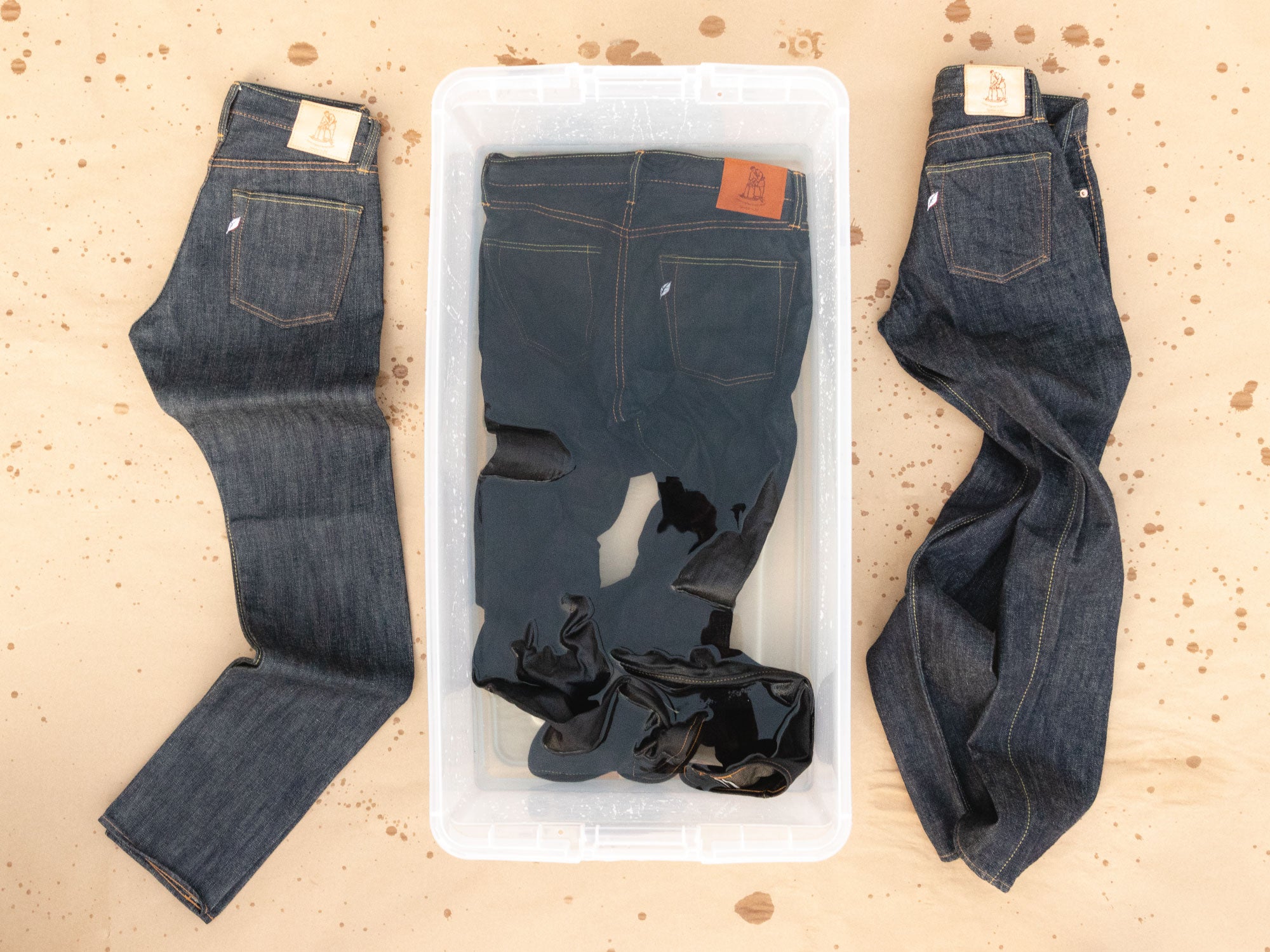
Read the care notes for the pair you choose. The Maden Crimson instructions say to soak separately before first wear in water no warmer than 30°C. Do not use those instructions for every pair in this guide.
If the instructions call for a first soak, do it before deciding on a permanent hem. The leg length may change. Do not buy a painfully tight pair and count on it stretching enough to fit.
Check the measurements before ordering
Lay out a pair of jeans that fits you well and compare it with the size guide for your chosen pair. Check waist, rise, thigh and inseam using the same measuring method. Allow for the room you want when sitting and moving, as well as how the jeans look when standing.
If two pairs meet your needs, compare their current prices and decide which details you will enjoy wearing. You can see the options in Selvedge Jeans, with measurements and care advice on each product page. For more help with the measurements, read our sizing guide.